Artno
The artist Assemblages Paintings Photography Contact
PT FR EN

Paintings

Oil, acrylic, sand and unusual supports build surfaces poised between abstraction, mental landscape and ecological inquiry.

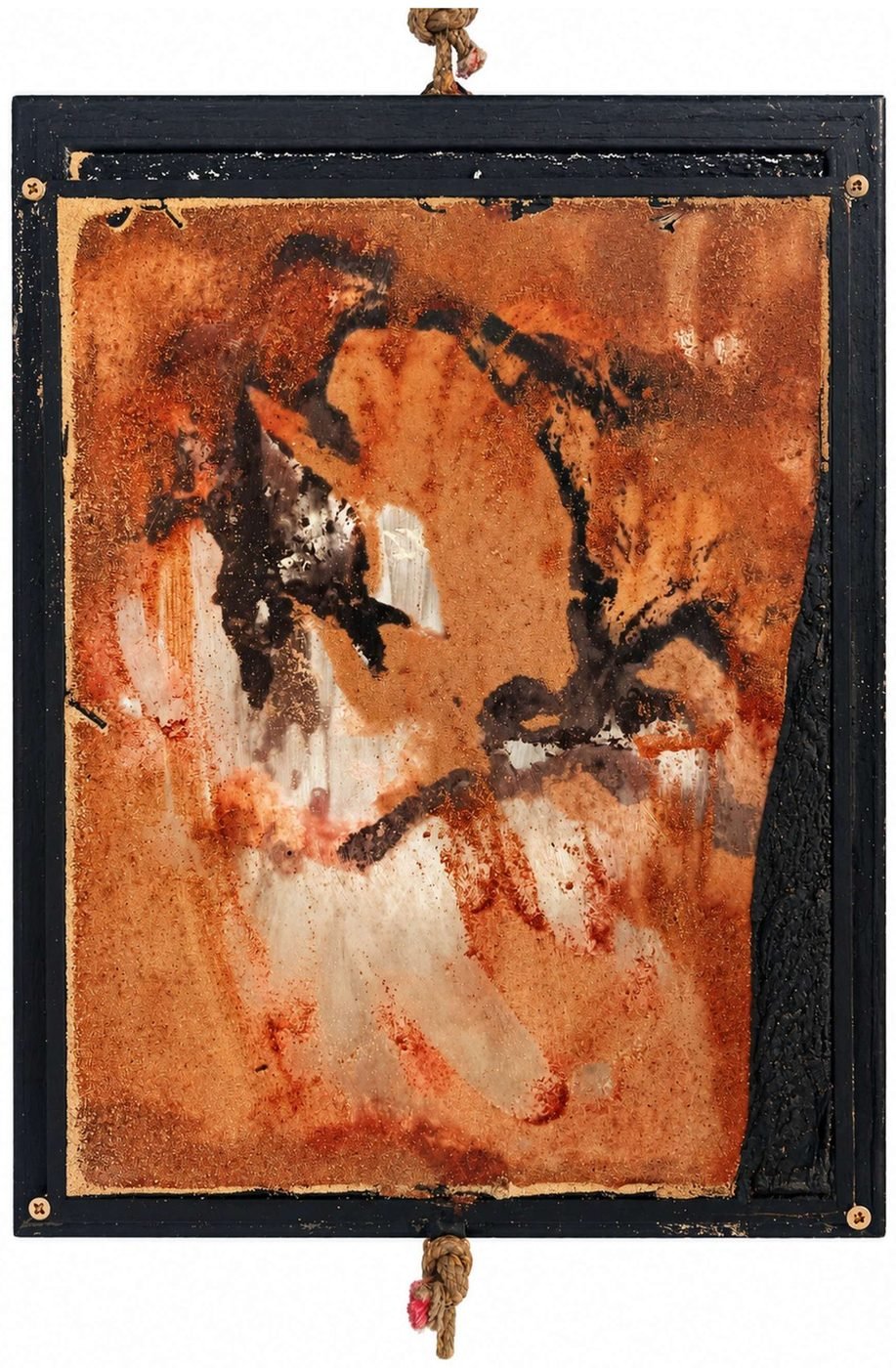
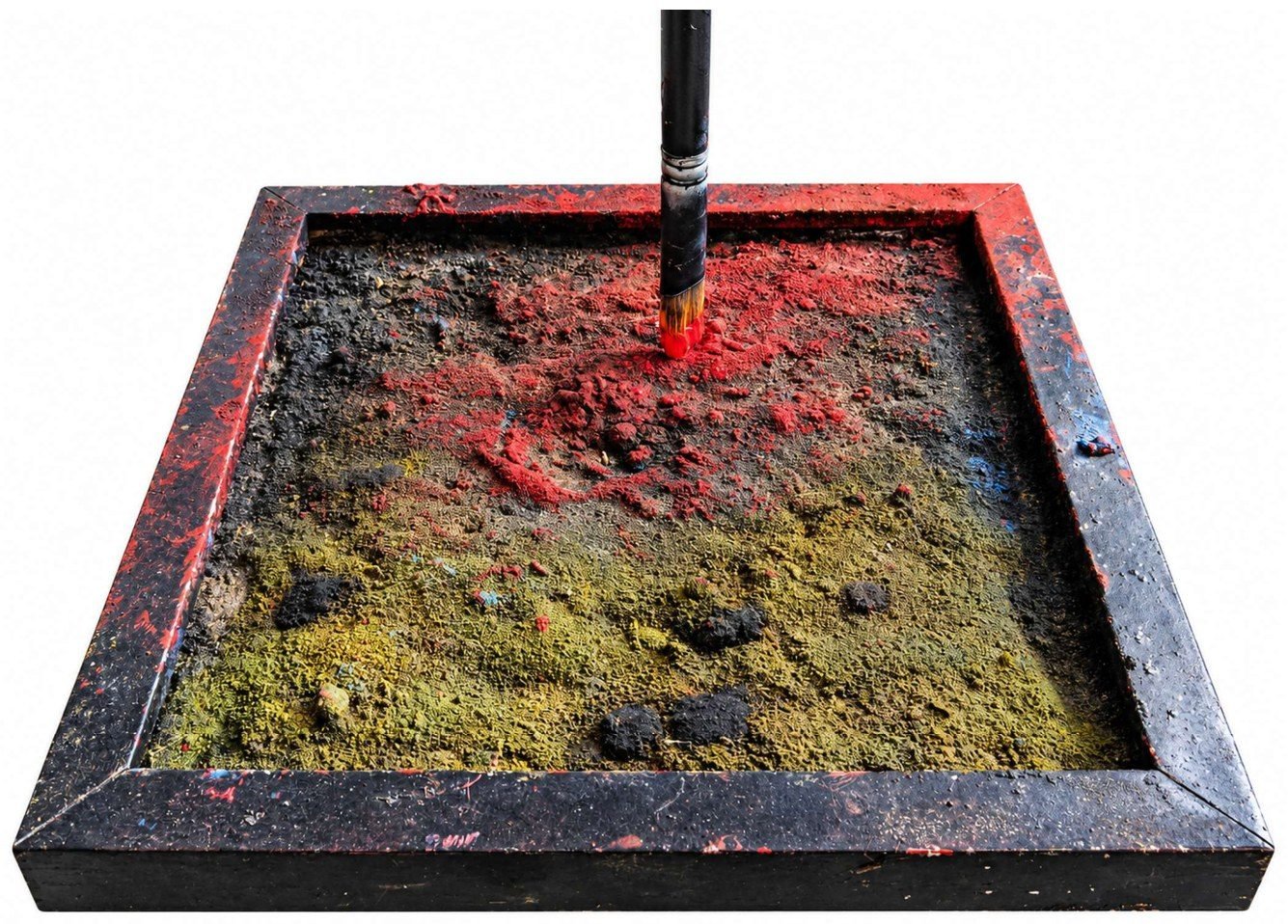
Automatism — Paintbrush, oil paint and sand mixed together — Arnaud Caron (Artno)

Automatism

MaterialsPaintbrush, oil paint and sand mixed together
Dimensions30 × 30 cm
TypeMobile

The work questions the artist’s place in the creative process by entrusting part of the pictorial gesture to a natural force: the wind. Set in motion by air currents, the brush produces unpredictable marks, turning the wind into a true actor and letting nature complete the work. The wind acquires a handwriting of its own.

By symbolically abandoning his brush to the wind, the artist ultimately raises an essential question: who is really the author of the work — the one who devises the apparatus, or the natural force that produces the gesture?
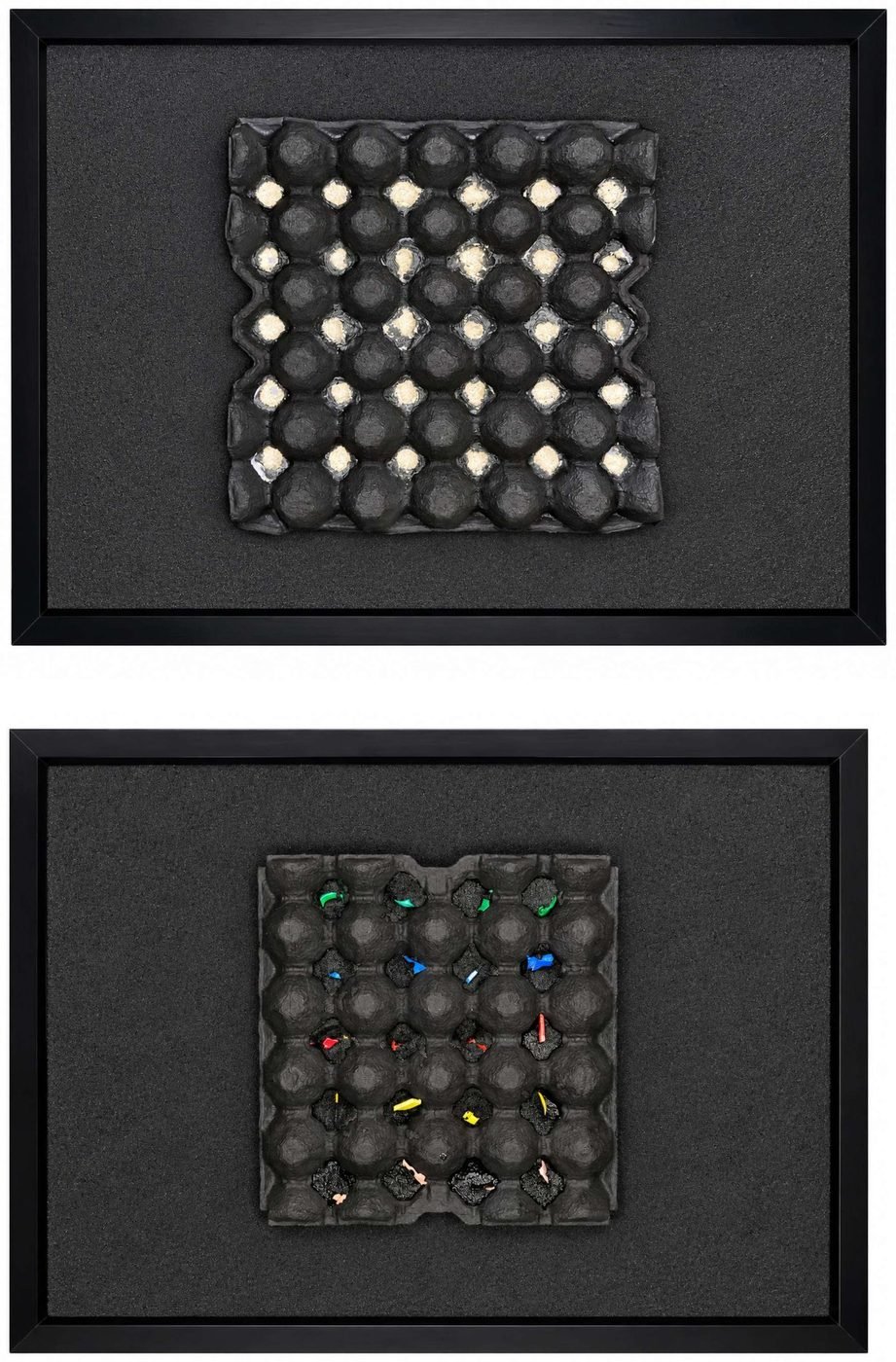
Incubator 1 and 2 — Polystyrene, plastics, sand, acrylic paint — Arnaud Caron (Artno)

Incubator 1 and 2

MaterialsPolystyrene, plastics, sand, acrylic paint
Dimensions43 × 63 cm

The series repurposes an object meant to protect and contain life, to symbolically evoke what nature holds within it and what human activity introduces into it.

In ‘Incubator 1’, only sand appears at the heart of the cells that recall a place of incubation. In ‘Incubator 2’, the same structure remains, but coloured plastic fragments now appear within the sand. Their presence reveals an unsettling reality: waste is now integrated into the very matter in which life is supposed to be born.

The works are a metaphor for our contemporary environment. They raise a question about the legacy we are preparing: if plastic today penetrates all the way into the places where life takes shape, what world are we in the process of hatching?

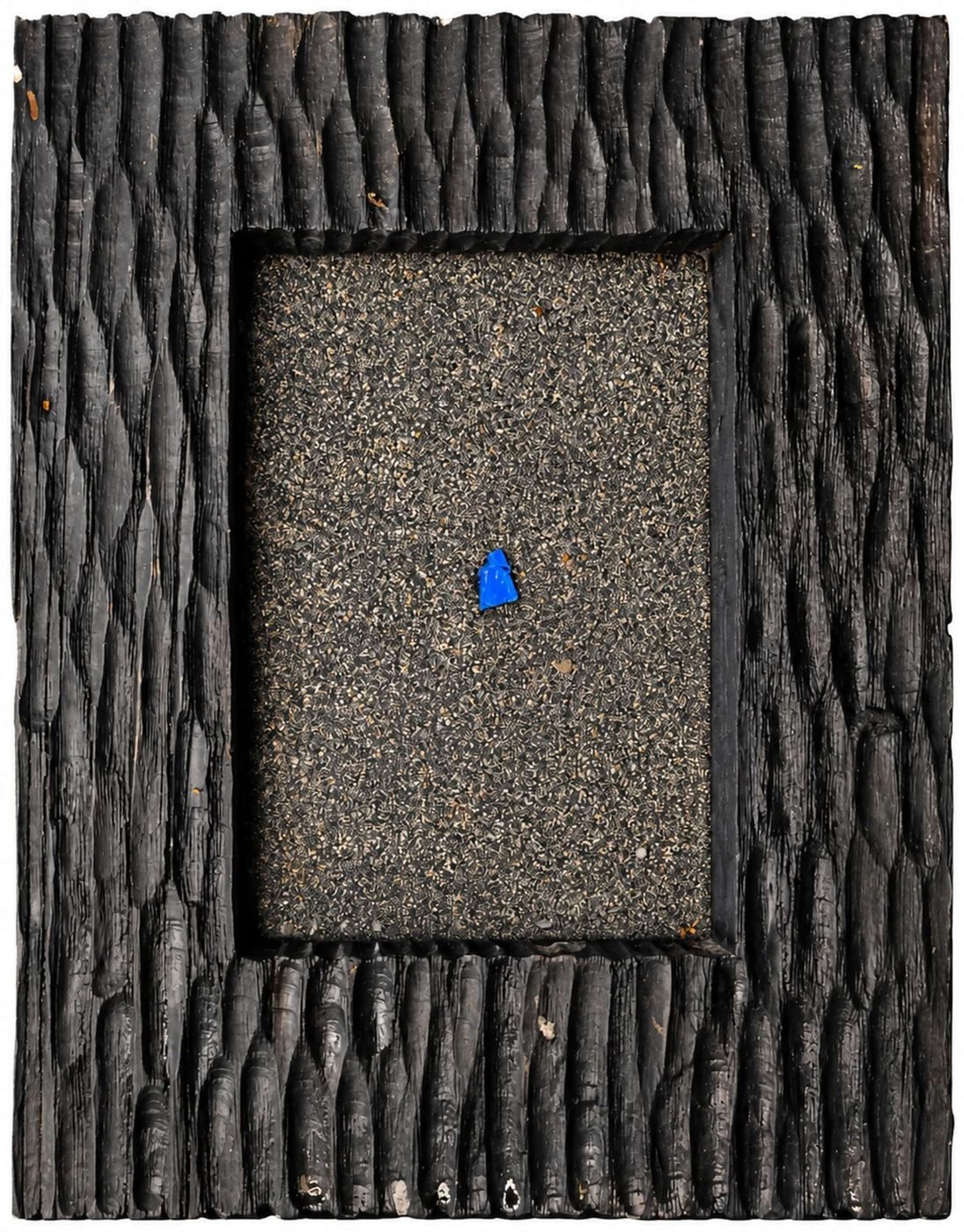
Fossil of the Future — Plastic, acrylic paint and sand mixed together — Arnaud Caron (Artno)

Fossil of the Future

MaterialsPlastic, acrylic paint and sand mixed together
Dimensions26 × 20 cm

The tiny fragment of blue plastic found on a beach is placed at the centre of a precious frame: it is elevated to the rank of a fossil of the Anthropocene era. The plastic waste that humanity mixes into nature persists, indifferent to the natural cycle of decomposition.

Minute in size but almost unchanging through time, this fragment becomes a witness to our passage and our impact on the environment.

Hourglass — Glass, sand, acrylic paint, oil paint — Arnaud Caron (Artno)

Hourglass

MaterialsGlass, sand, acrylic paint, oil paint
Dimensions35 × 25 cm
TypeMobile

‘Hourglass’ explores time as a transforming force acting on the work. Conceived as a mobile, it consists of two painted glass panes between which sand and black acrylic paint are trapped. Suspended, the work is subject to movement and gravity: little by little, the sand escapes the frame and irreversibly alters its appearance.

The title then takes on a meaning both material and symbolic. As in a traditional hourglass, the shifting sand makes the passage of time visible, but here it cannot be turned over to start again. The escaping sand thus becomes the measure of an irreversible time: as the work empties itself of its matter, it reveals itself.

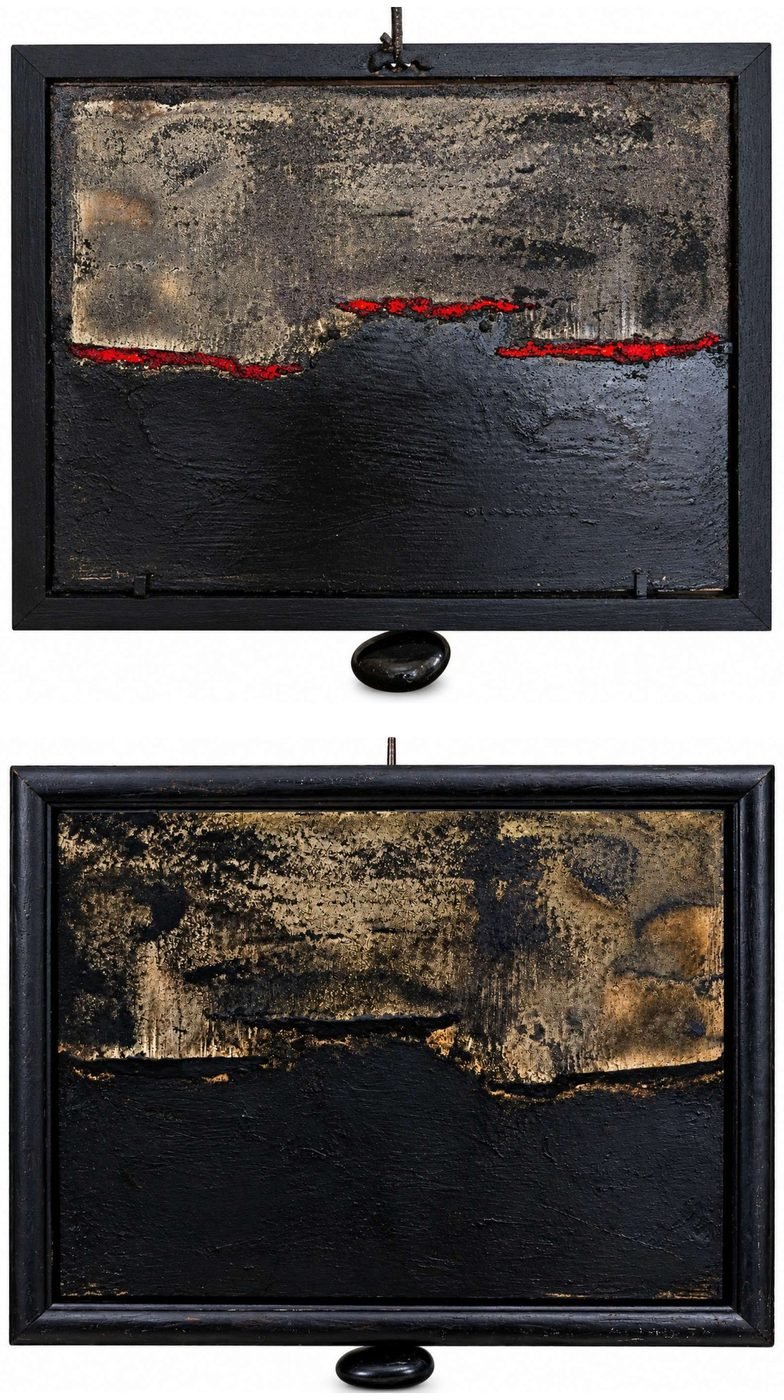
Horizon — Glass pane, rope, stone, oil paint and sand mixed together — Arnaud Caron (Artno)

Horizon

MaterialsGlass pane, rope, stone, oil paint and sand mixed together
Dimensions25 × 30 cm
TypeMobile

‘Horizon’ has two faces offering two different visions of the same landscape. Suspended, the piece turns with the wind and never permanently settles on one face rather than the other. The viewer alternately sees two atmospheres appear, two perceptions of the same reality, but a single horizon.

What appears to be a limit then becomes a space of passage. The work reminds us that the same reality can reveal different faces depending on the point from which we observe it.

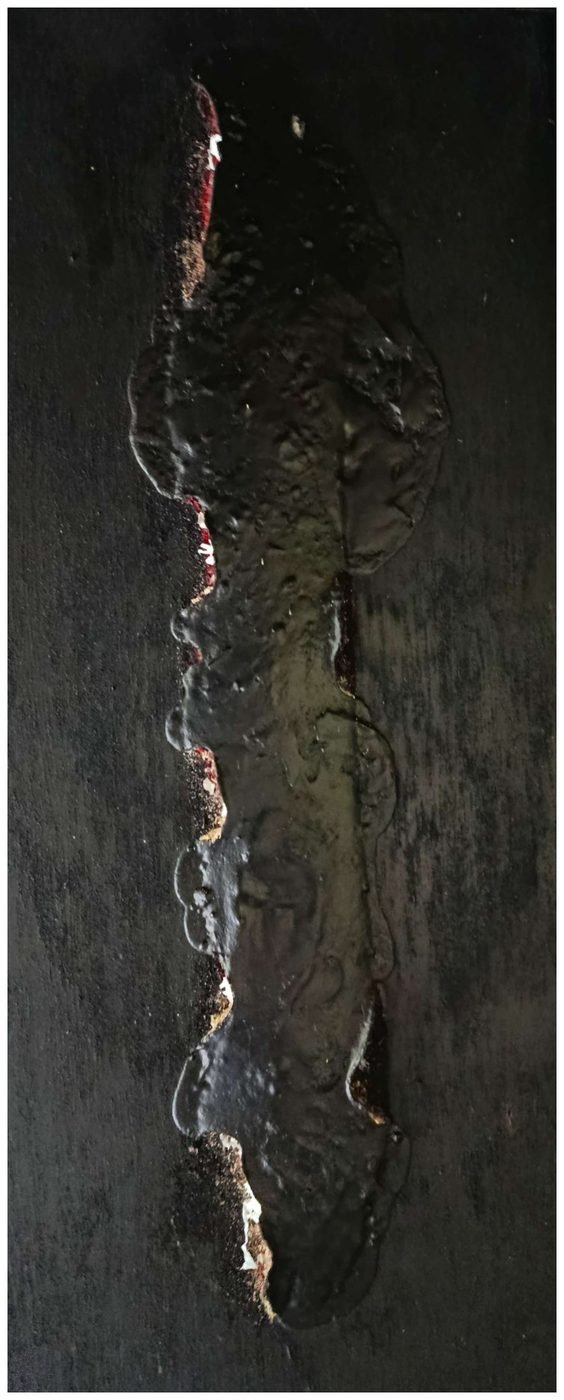
The Island of Plastics — Plastics, sand, acrylic paint, oil paint — Arnaud Caron (Artno)

The Island of Plastics

MaterialsPlastics, sand, acrylic paint, oil paint
Dimensions100 × 50 cm

‘The Island of Plastics’ symbolises a nature morte, destroyed by pollution. Beneath the dark, funereal mass appears sand, the original natural material, mixed with fragments of plastic. Pollution no longer merely covers nature: it transforms it from within.

The work thus offers the image of a territory where the accumulation of waste has ended up altering nature itself. Plastic buries itself in the landscape, contaminates it, and progressively contributes to its disappearance.

The island then becomes the symbol of a nature morte under the weight of the waste produced by mankind.

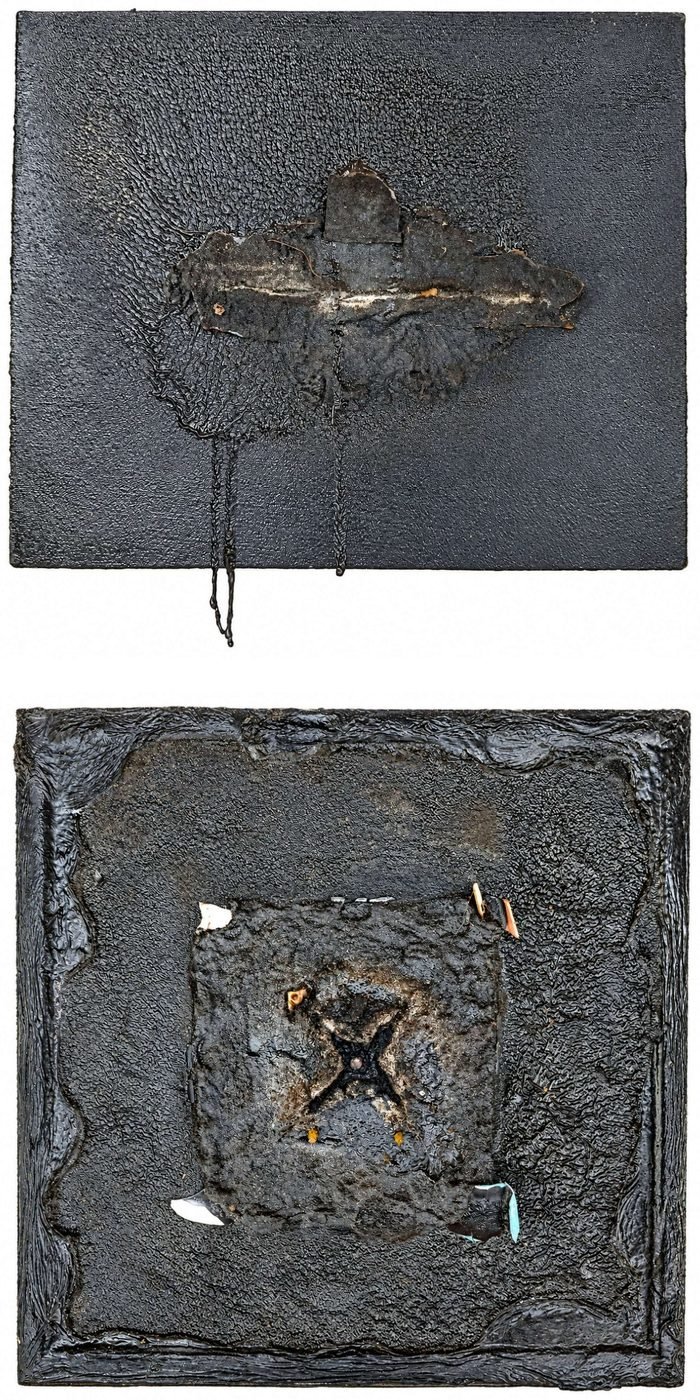
Now Futur 1 and 2 — Plastics, acrylic paint and sand mixed together — Arnaud Caron (Artno)

Now Futur 1 and 2

MaterialsPlastics, acrylic paint and sand mixed together
Dimensions30 × 30 cm

The title ‘Now Futur’ deliberately creates a tension between two temporalities: now and tomorrow. The future is no longer presented as a distant, abstract time; it is already contained in what we produce, consume and discard today.

The paintings can be seen as a form of anticipated archaeology: they invite us to look at our present from an imagined future, and to ask ourselves which traces of our civilisation will survive it.

The future may not be what comes after us: it is what we are already leaving behind us.

Nature 1 and 2 — Oil paint and sand mixed together — Arnaud Caron (Artno)

Nature 1 and 2

MaterialsOil paint and sand mixed together
Dimensions40 × 50 cm

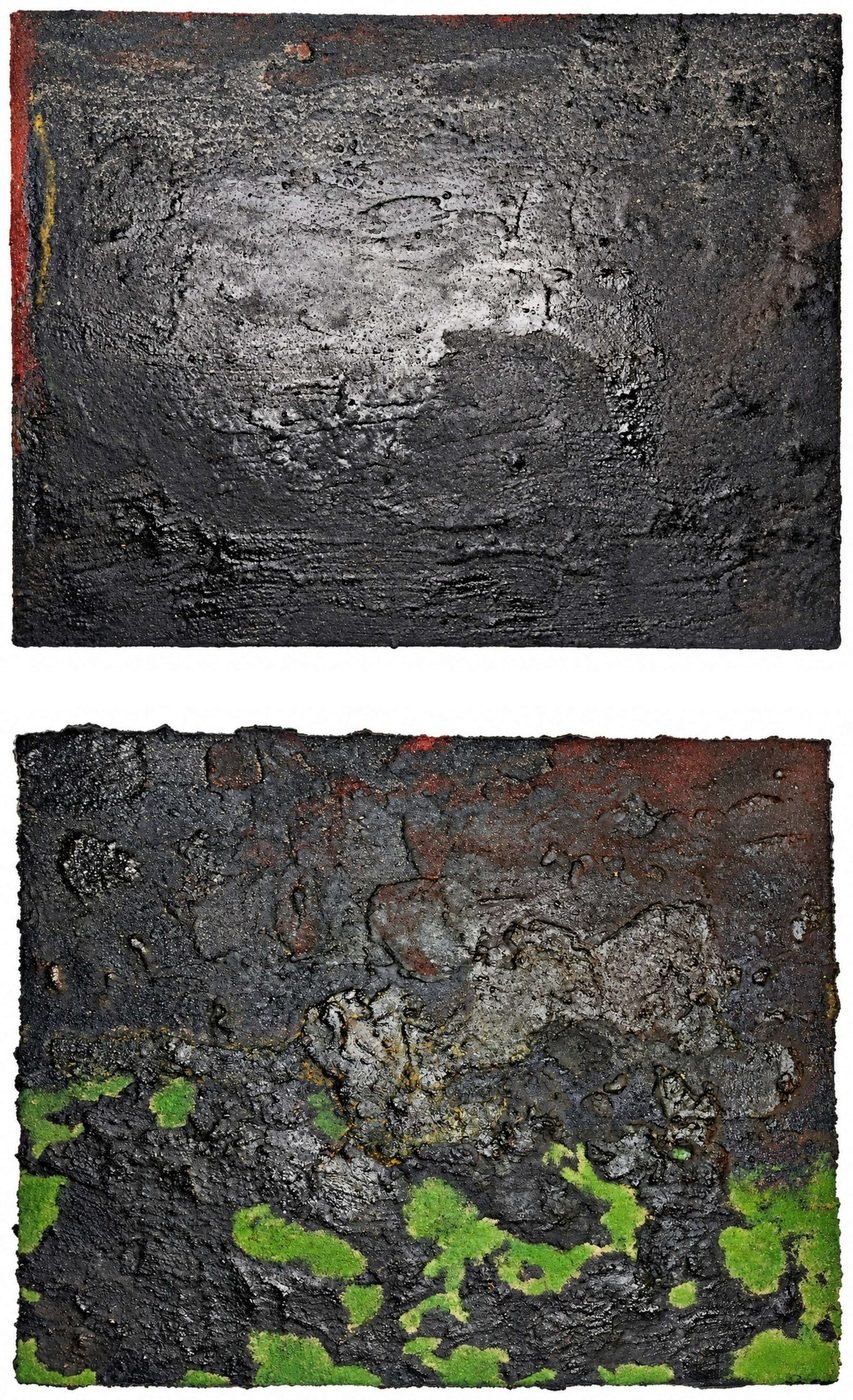
The ‘Nature’ series offers a reflection on the transformation of the natural world and its capacity to survive despite the harm inflicted on it. The two works can be read as two moments of a single cycle: destruction and rebirth. The matter nonetheless retains the traces of what it has undergone; rebirth does not erase the wounds of the past.

The series thus expresses a tension between destruction and regeneration. It reminds us that nature can be profoundly altered by human action, yet also possesses an extraordinary capacity for resilience.

Even when covered, burned or smothered, life still seeks a way to reappear.

Celestial Unity — Glass, oil paint and sand mixed together — Arnaud Caron (Artno)

Celestial Unity

MaterialsGlass, oil paint and sand mixed together
Dimensions80 × 60 cm
TypeStained glass

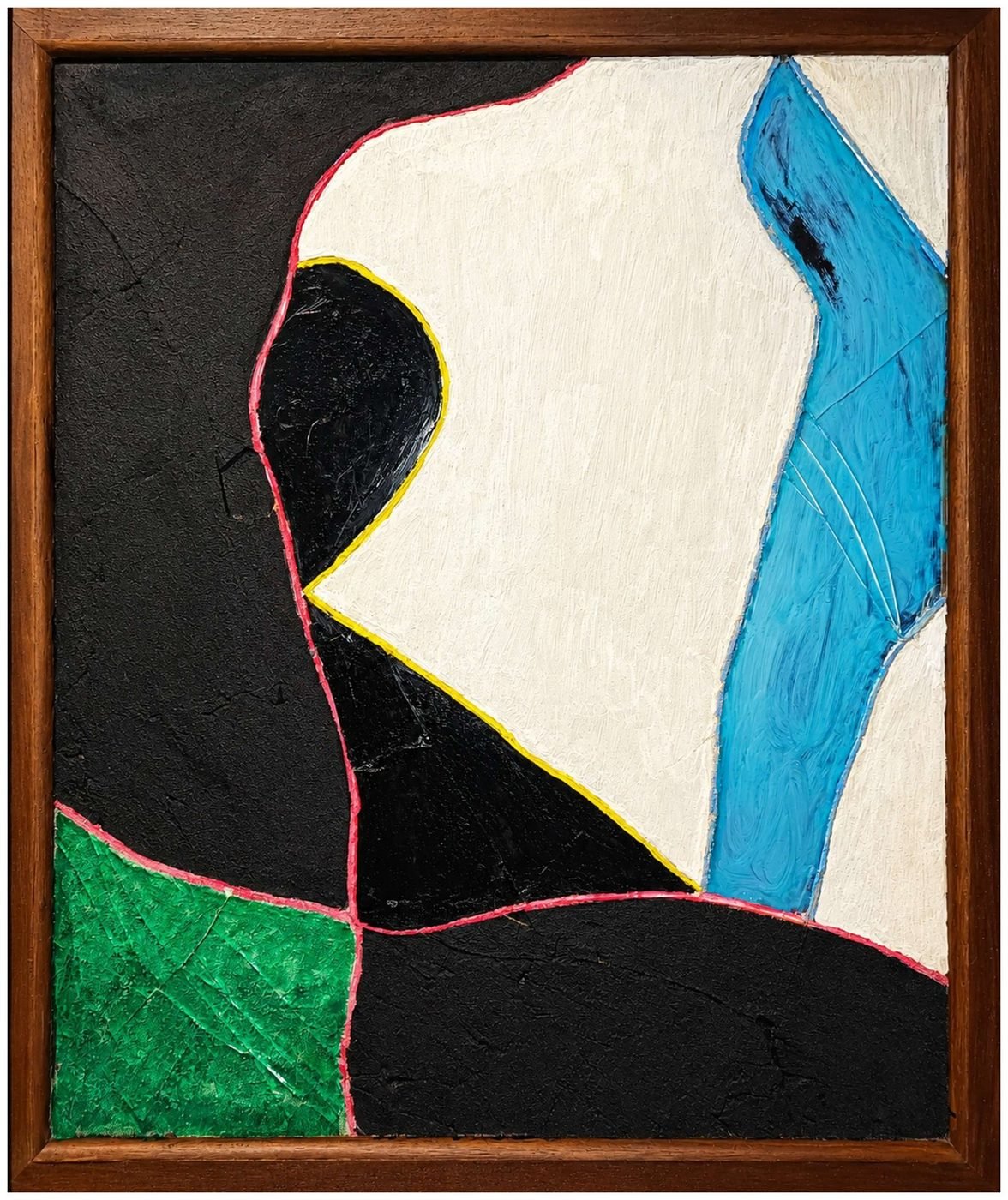
The work explores the encounter between human beings, nature and a spiritual dimension that seems to surpass them. Through the interplay of shapes and colours, several dimensions symbolically meet: earth, mankind and sky.

The coloured lines running through the composition play an essential role. Rather than separating the forms, they connect them. The boundaries become zones of encounter, as if each element could only truly exist in relation to the others.

‘Celestial Unity’ thus invites us to move beyond visible oppositions. Behind the fragmentation of forms and colours emerges the idea of a deeper unity: mankind, nature and the universe would not be separate realities, but different expressions of one and the same whole.